
The one-sentence rule of thumb
If it's original equipment failing from age or normal wear, it's the landlord's bill; if it's damage someone caused or an accessory they added, it's on the tenant. That covers most arguments, but garage doors have enough moving parts that the exceptions matter just as much as the rule.
Where the rule gets messy
The springs snap after eight years of lifting a 150-pound door twice a day. That's wear and tear — landlord's responsibility, full stop. But if a tenant backed the car into the door, let their kid hang off the bottom panel, or jammed the opener by forcing it closed on a bike, that's tenant-caused damage even though it looks like the same broken door.
- Lease language wins first. Some leases explicitly shift all garage door maintenance to the tenant in exchange for lower rent, or exclude garage doors from the landlord's standard repair clause entirely. Read the actual lease before assuming the general rule applies.
- Remotes, keypads, and batteries are usually the tenant's job. These are cheap, consumable, and tenant-replaceable, so most leases treat them like light bulbs rather than structural repairs.
- If the tenant installs their own smart opener or accessory, they typically own that equipment and its upkeep, even though the door itself stays the landlord's.
- Neglect can flip responsibility. A tenant who hears grinding, sees fraying cables, or watches the door slam shut faster every week and says nothing for six months may end up owning part of the repair cost if the landlord can show the problem was reported late and got worse from inaction.
In other words: age and normal operation point to the landlord; force, accidents, and silence point to the tenant.
What to inspect at move-in (before you sign anything)
A five-minute walk-through at move-in settles 90% of future disputes, because it proves what condition the door was already in. Do this together, take photos and a short video with a timestamp, and email it to the landlord the same day.
- Disconnect the opener and lift the door by hand. It should move smoothly and stay wherever you let go, roughly waist-height. If it crashes down or shoots up, the springs are already out of balance — note it before you touch the opener again.
- Look at the springs themselves. Torsion springs mounted above the door should have no visible gaps between coils and no rust streaks. Surface rust from monsoon humidity is common and not automatically a dealbreaker, but flaking or pitted coils are a red flag worth documenting.
- Check the weatherstripping along the bottom and sides. Arizona sun breaks down rubber seals faster than almost anywhere else — look for cracking, brittleness, or sections that have pulled away from UV exposure. A failed seal lets in dust and heat, and it's cheap to replace, but you want it on record as pre-existing.
- Test the photo-eye safety sensors near the bottom of the tracks. Wave a hand through the beam while the door is closing; it should reverse immediately. If it doesn't, flag it as a safety issue, not just a maintenance item.
- Run the opener through a full cycle and listen. Grinding, popping, or a labored hum often means a worn drive mechanism or a motor that's been fighting dry heat and dust for years.
- Check inside the tracks for dust buildup or debris. Monsoon season leaves grit that can work into rollers and cause binding; a track full of dust at move-in tells you maintenance has been inconsistent.
- Test every remote and the keypad so there's no argument later about whether they worked when you moved in.
Keep that documentation somewhere you can find it later — a shared folder, a text thread, an email you can search. Desert heat accelerates wear on openers, lubricant, and seals, so a door that looks fine in November can start acting up by next summer, and you'll want proof of its original condition.
When to call Tempe Garage Door
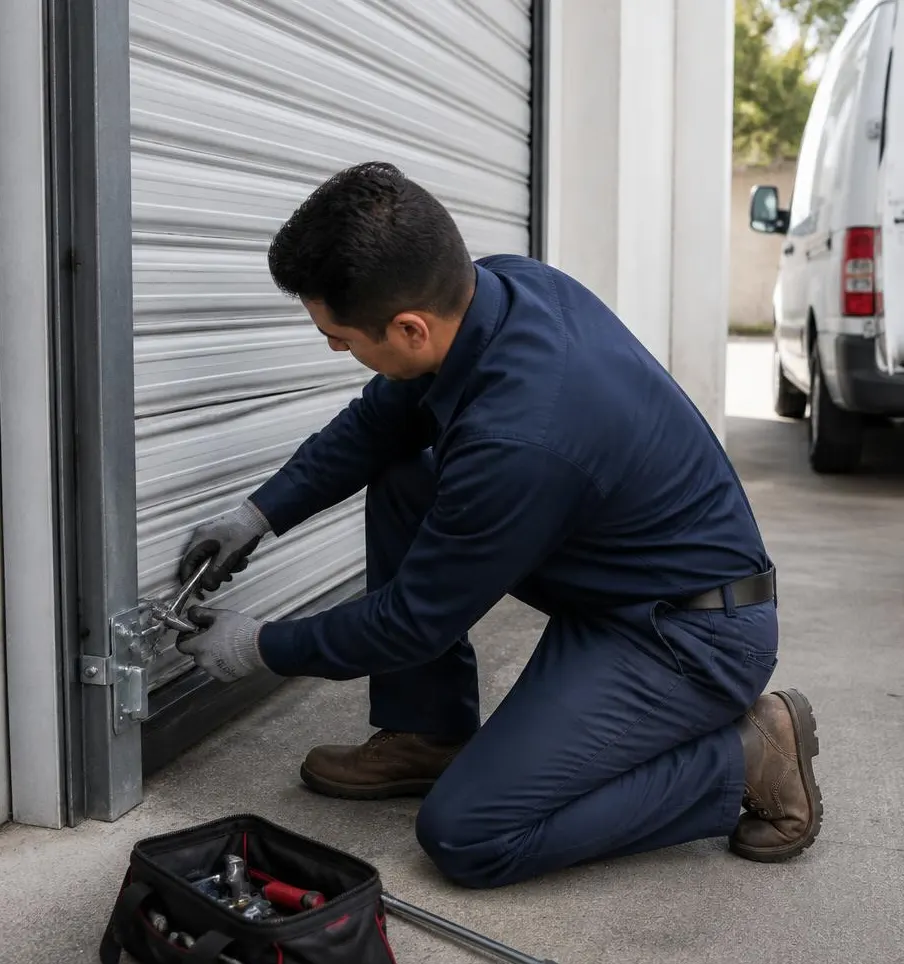
Whoever is financially responsible, don't DIY spring work — torsion springs are under enough tension to cause serious injury, and it's not a landlord-vs-tenant savings worth attempting. Call us for spring replacement when the balance test fails, or for garage door maintenance if you want a documented inspection report at move-in or move-out that both parties can point to later. We'll check springs, cables, rollers, seals, and opener performance, give you straightforward pricing with no hidden fees, and leave you with a clear written summary of what's working and what isn't.
If you're moving into or out of a rental anywhere in Tempe, Mesa, Chandler, Scottsdale, Gilbert, Phoenix, Ahwatukee, or Guadalupe and want a neutral inspection on record, give Tempe Garage Door a call before the argument starts.