
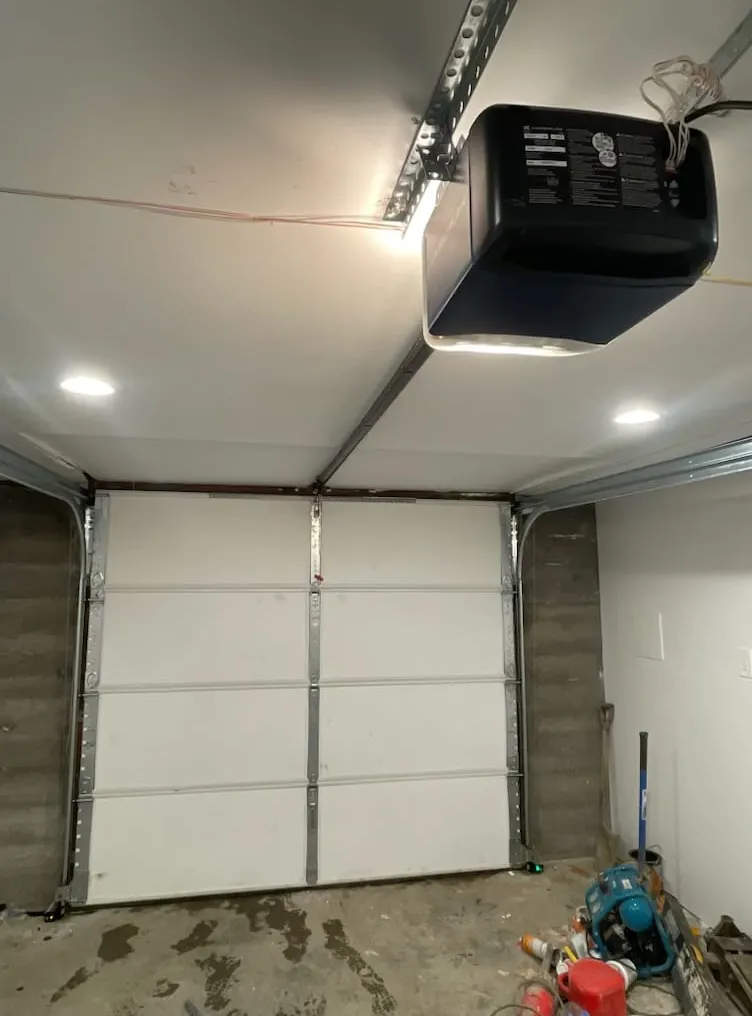
The moment you notice something's off
It usually starts small. The door slams the last two inches instead of settling down gently. Or it reverses halfway up for no reason, lights blinking, while one of you insists "it's always done that" and the other swears it just started last week. Maybe the door stops a foot short of the floor and just hangs there, or it keeps trying to close on something that isn't even in the way. Before you blame the door, the opener, or each other, there are two settings worth understanding: force and travel limits. Nine times out of ten, one of them is the actual culprit.
What travel limits actually control
Travel limits tell the opener exactly how far to move the door in each direction before it should stop. Picture two invisible markers, one for "fully open" and one for "fully closed." The opener's motor doesn't know where your floor is or where the top of the track sits unless you've told it, or unless it learned those points during setup.
When travel limits are set wrong, you get specific, recognizable symptoms:
- The door stops short of the floor, leaving a gap that lets in dust, heat, or critters.
- The door tries to keep closing after it's already hit the floor, grinding gears or straining the opener.
- The door doesn't fully open, so you duck under it or clip your roof rack on the way out.
- The opener light blinks and the door reverses immediately on close, because it thinks it's hit an obstruction when it's really just hit its real stopping point before the limit told it to stop.
What force settings actually control
Force is different. It controls how much resistance the opener will push through before deciding something is blocking the door and reversing for safety. Too little force and the door won't finish opening or closing on a cold desert morning when the springs haven't warmed up or the track has a little extra friction. Too much force and the opener will push through real obstructions, including a toy, a pet, or a person, which is exactly the safety problem these limits exist to prevent.
Here's the part that causes real damage: if the force is set too high to "solve" a different problem, like a dragging track or a dying spring, the opener will muscle through resistance it shouldn't. That hides the underlying issue while quietly wearing out the motor gear, stripping the drive mechanism, or putting extra stress on cables and rollers. You end up replacing an opener that was never the real problem, while the spring or track that caused the resistance is still bad.
Why these settings drift out of adjustment here specifically
Force and travel limits aren't "set once and done" in a climate like this. A few things in the Phoenix-area heat push them out of calibration faster than milder climates:
- Lubricant breakdown. Extreme dry heat thins and cooks standard lubricant on rollers and hinges, increasing friction. More friction means the door needs more force to travel the same distance, which can trip force-based reversals that worked fine a few months earlier.
- Metal expansion and contraction. Hot afternoons versus cool desert nights cause the track and door panels to expand and contract slightly. Over months, this can shift where the door physically meets its stops, making old travel limit settings slightly inaccurate.
- Monsoon dust buildup. Dust and grit from sudden storms work into tracks and rollers, adding resistance that mimics an obstruction. An opener with force set too sensitively will reverse constantly during dusty stretches; one set too high will just grind through the grit.
How to check it yourself before you call anyone
Most openers manufactured in the last couple of decades have labeled force and travel adjustment dials or buttons, usually under a small cover on the motor unit. The exact steps vary by brand, but the general process is:
- Note how the door currently behaves, both opening and closing, including exactly where it stops or reverses.
- Locate the force and limit adjustment screws or digital settings in the owner's manual for your model.
- Make small adjustments, one setting at a time, testing the door after each change.
- Always test with the safety reversal: place a 2x4 flat on the ground where the door closes. The door should reverse immediately on contact. If it doesn't, the force is set dangerously high and needs to come down regardless of what else is going on.
If you've made a couple of adjustments and the door still won't finish its travel, or it still reverses on an empty threshold, the problem usually isn't the settings at all. It's a worn spring, a bent track, or roller drag that the settings were trying to compensate for.
When to call Tempe Garage Door
If adjusting the dials doesn't fix it, or if the door is slamming, grinding, or straining to move, that's a sign of a mechanical issue hiding behind the opener settings. Our Opener Repair & Installation service includes diagnosing whether the real problem is the opener, the track, or the spring system, so you're not just resetting numbers on a unit that's compensating for something else. If the door feels heavy, uneven, or slow regardless of opener settings, that often points to spring wear, and our Spring Replacement service handles that directly rather than letting the opener take the strain.
If you're in Tempe, Mesa, Chandler, Scottsdale, Gilbert, Phoenix, Ahwatukee, or Guadalupe and your door isn't stopping, closing, or reversing the way it should, give Tempe Garage Door a call. We'll find out whether it's the settings or the door itself, and fix the one that's actually broken.