
Short answer: no, it's not just a bigger version of your garage door
A commercial or warehouse overhead door is built differently, runs differently, and needs a different maintenance schedule than the door on your house. They can look similar from the curb — horizontal panel sections rolling up on tracks — but the springs, motors, materials, and expected workload are built for a completely different job. If you and your spouse are arguing about whether your neighbor's shop door is \"basically the same thing, just bigger,\" you can settle it right here.
Why the construction is different
Residential garage doors are engineered for a handful of cycles a day — maybe 6 to 10 opens and closes if a family is in and out. Commercial and warehouse doors are often rated for dozens of cycles daily, sometimes continuously through a work shift. That changes almost everything underneath the skin:
- Springs: Commercial doors typically use heavier torsion springs rated for thousands more cycles, and larger doors often run multiple springs working together instead of one or two.
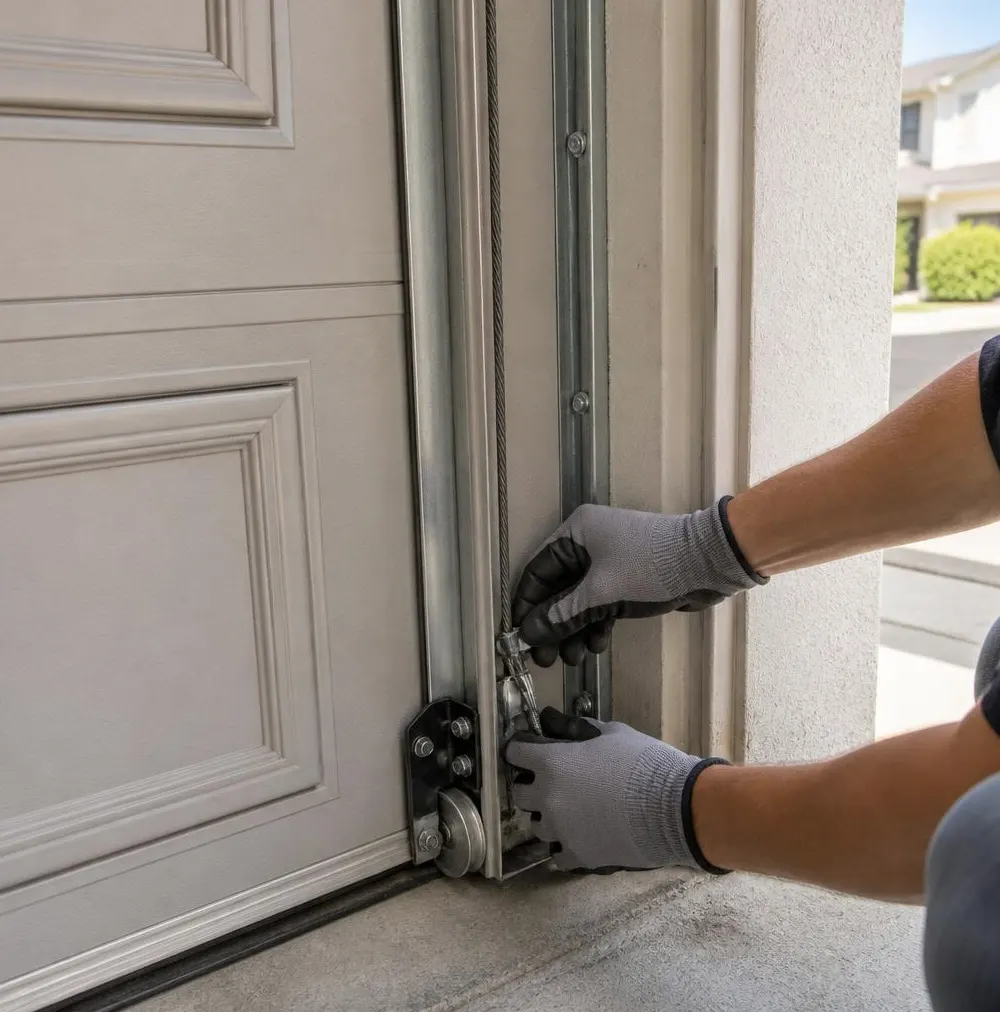
- Tracks and hinges: Commercial setups use thicker gauge steel tracks and reinforced hinges to handle the extra weight and frequency without warping.
- Drive systems: Residential openers are chain, belt, screw, or direct-drive units sized for a single door. Commercial operators are often jackshaft or trolley-style motors built for continuous duty, sometimes with separate controls for different access points.
- Materials: Warehouse doors frequently use heavier insulated steel or aluminum panels, sometimes with reinforced bottom sections for forklift traffic or loading dock impact.
Panel design and insulation
Residential doors are chosen partly for curb appeal — wood-look finishes, windows, decorative hardware. Commercial doors are chosen for durability and insulation value first, appearance second. In a climate like ours, insulation matters for both: it keeps a home's attached garage from turning into an oven, and it keeps a shop or warehouse interior workable during a Tempe summer.
Why the maintenance schedule isn't the same either
Because commercial doors cycle so much more often, small problems show up faster and get worse faster. A home garage door might go months with a slightly dry hinge before anyone notices a squeak. A commercial door doing the same thing 40 times a day will wear out that hinge, strip a roller, or stress a spring within weeks.
Our dry heat and dust make this worse for both types of doors, but commercial doors feel it sooner:
- Lubricant breakdown: The extreme dry heat cooks standard lubricants faster, and with high-cycle commercial doors, dried-out rollers and hinges turn into grinding, binding, or track misalignment much quicker than on a home door.
- Monsoon dust: Blowing dust works its way into tracks and bearings on any overhead door, but a commercial door exposed to loading dock traffic all day collects it faster and needs more frequent clearing.
- UV exposure: Panel finishes and weatherstripping fade and crack under constant sun, and commercial doors — often larger and more exposed — show wear sooner if seals aren't checked regularly.
- Cool desert nights: The daily temperature swing stresses metal components through expansion and contraction. High-cycle doors feel this fatigue sooner than a door that only opens a few times a day.
Bottom line for maintenance: a home garage door might do fine with a seasonal check. A commercial or warehouse door doing serious daily work needs more frequent inspection of springs, cables, and hardware — because when something fails on a high-cycle door, it fails under more load and more often.
When to call Tempe Garage Door
If you're dealing with a sluggish, noisy, or off-track door — residential or small commercial — our Garage Door Maintenance service covers the lubrication, hardware tightening, and alignment checks that keep cycles smooth and springs from wearing out early. If something's already broken or a door won't open before a shift starts, our Emergency Garage Door Service gets a technician out to diagnose the issue and get you back up and running without guessing at the problem over the phone.
Whether it's the door on your house or the roll-up at a shop down the street, give Tempe Garage Door a call — we serve homes and businesses across Tempe, AZ and the surrounding area, and we'll tell you straight what your door actually needs.